
2026 Q2 Blockchain Commons Report
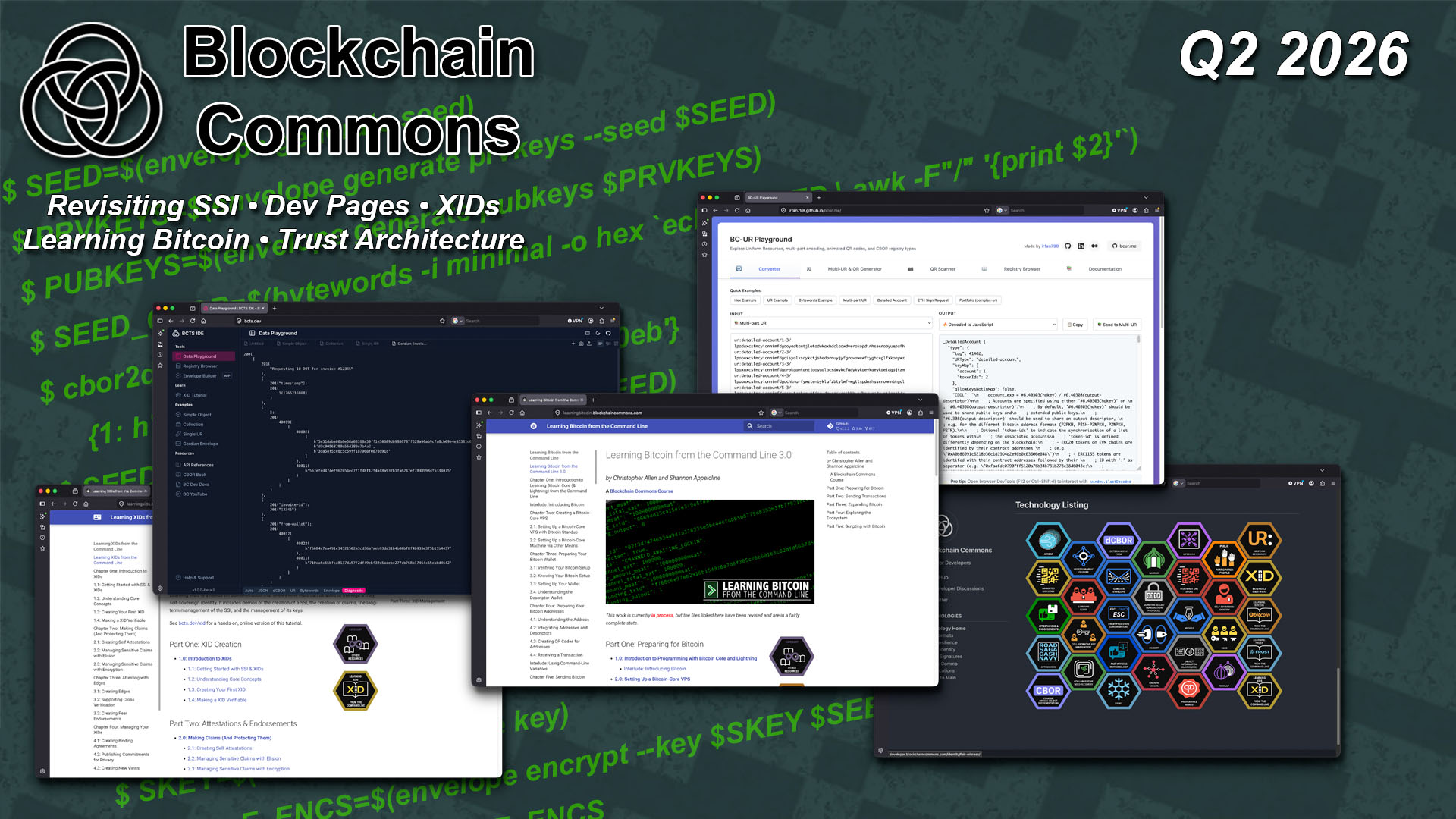
The second quarter of 2026 at Blockchain Commons focused partially on decentralized identity and partially on improving our resources for your use. Here’s a summary of our work:
Revisiting SSI:
- The Redline
- The Meetings
- The Principles
Dev Page Updates:
- Technology Pages
- Digital Identity Page
- Resources Pages
- Apps Page
Learning XIDs:
- Keys in XIDs
- Amira Progress Report
Learning Bitcoin:
- New Course Pages
- Working with Secrets
Software Updates:
- Envelope CLI
- Stack Update
The Trust Architect Speaks:
- Agency in AI
- Ten Years of SSI
- Sanctuary and Exodus
- On Being the Fifteenth Standard
- When Intelligences Become a Permission
Grants
Here’s more on each of these:
Revisiting SSI
Christopher Allen has continued his work updating the SSI principles for 2026.
The Redline. To mark the April 26 anniversary of the publication of “The Path to Self-Sovereign Identity”, we released a redline version of updated principles. This remains a work-in-progress, but is a good first draft of how we’re changing the principles to reflect 10 years of technical evolution and what we’re considering adding.
The Meetings. Christopher presented the updated principles to the W3C CCG group in early May. We’ve since held meetings in May and June to support the community in continuing the update of the principles. Revisiting SSI is truly a community-focused project, intended to update the principles of SSI such that they’re meaningful to people doing real work on self-sovereign identity.
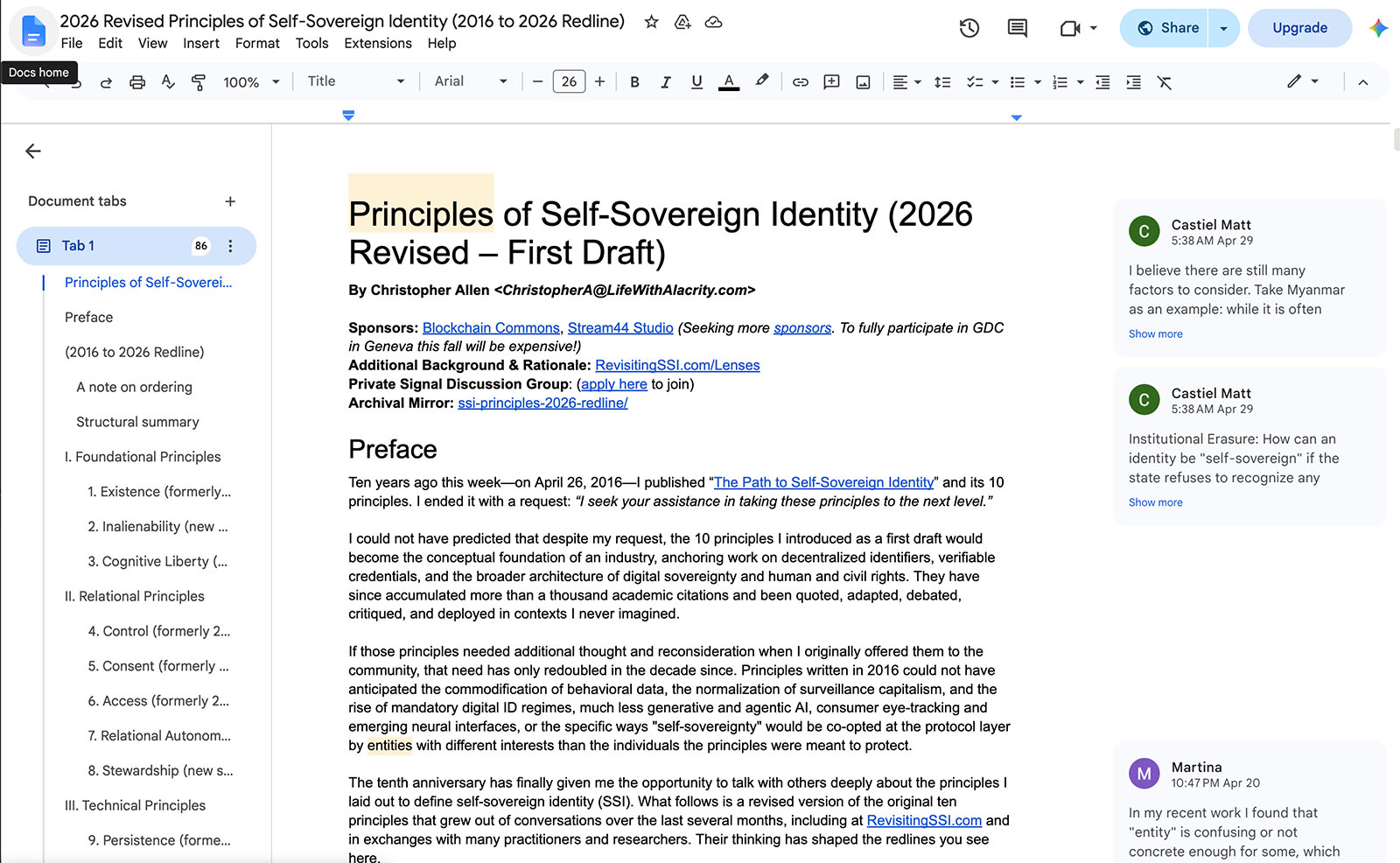
The Principles. The meetings have continued to evolve the principles. Participants have produced new drafts of the principles for portability & interoperability, minimalization, and persistence. One of our participants, Martina, has also focused on anti-coercion with a series of articles about Technological Paternalism, most recently “Technology Paternalism, Continued - Five Abilities and a Test for Self-Sovereign Identity”. We expect to incorporate this all into the new principles redline later this year, but we still have more to work through. You can join the Revisiting SSI announcement list for info on upcoming meetings if you’d like to participate!
Dev Pages Update
We undertook a large-scale update of our developer pages that concluded (in its first phase) last week. Our goal was to make the pages more accessible and usable and to fill in some gaps. Let us know how you use our pages and what you feel is missing (either organizationally or topically).
Technology Pages. The majority of our pages are now organized into a technology category that includes five subcategories: data formats, data resilience, digital identity, digital signatures, and secure communication. We hope these new categories will help developers to find what’s of most interest to them (and to see why we consider these categories of technology important!).
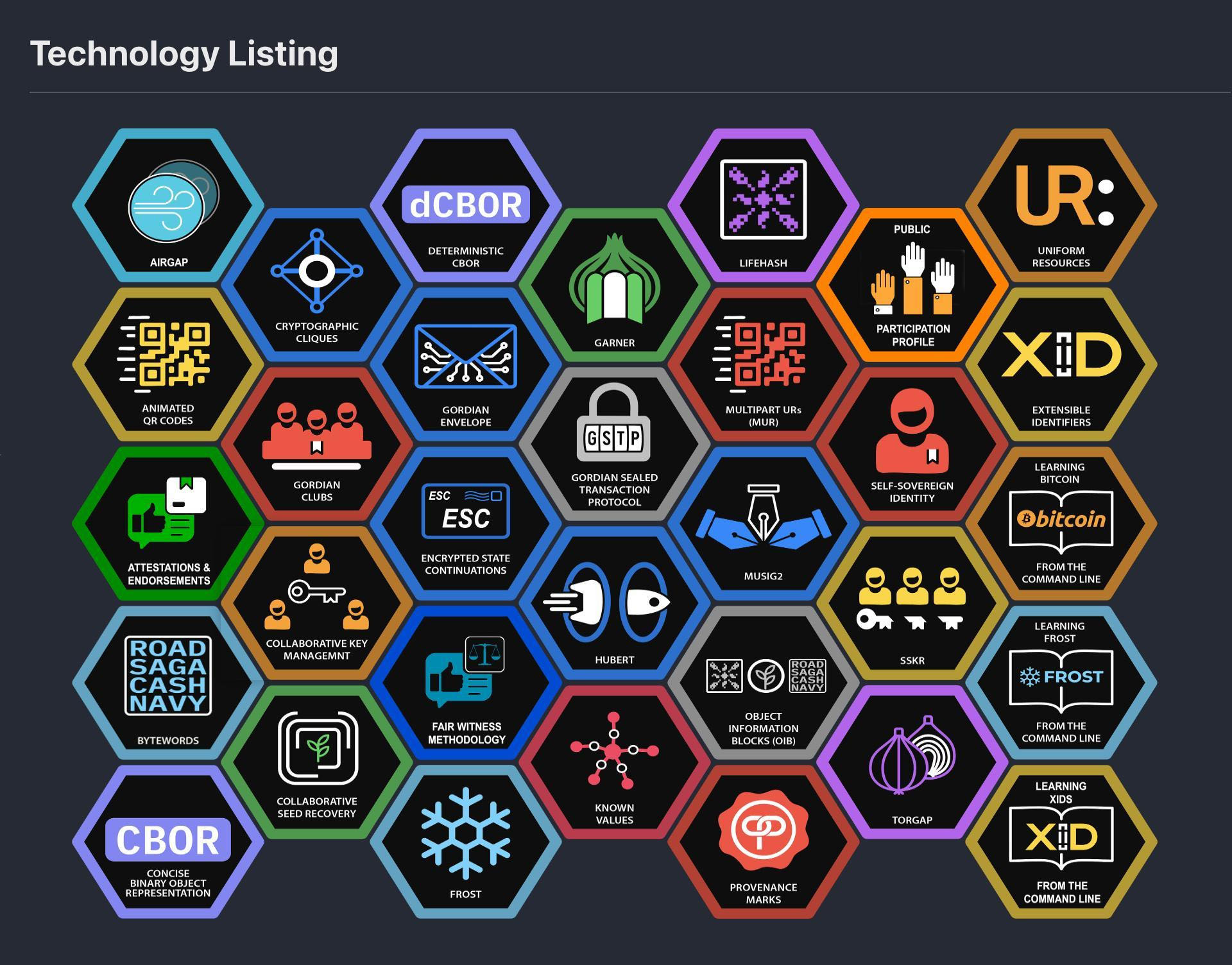
Digital Identity Page. The digital identity subcategory includes a lot of new content. That’s because we’ve been building toward digital identity for a while, but it’s only recently that our technological stack has reached the point where we can really focus on it. The subcategory includes new pages on self-sovereign identity, attestations & endorsements, fair witness methdology, and public participation profiles, which are our fundamental building blocks for creating identities that you truly control.
Resources Pages. The resources category allowed us to gather together all the things that might be immediately useful to you as a developer, including: our ever-growing list of command-line courses, our meeting records, our reference libraries, our reference apps, and our specifications.
Apps Page. We found the reference apps page particularly exciting, because it allowed us to highlight not just our iOS and Rust apps, but also the online playgrounds that allow you to test seeds, lifehashes, URs, and XIDs without having to install anything on your machine (and as ever, thanks to Leonardo and Irfan for creating the newest and most extensive playgrounds!).
BCTS IDE: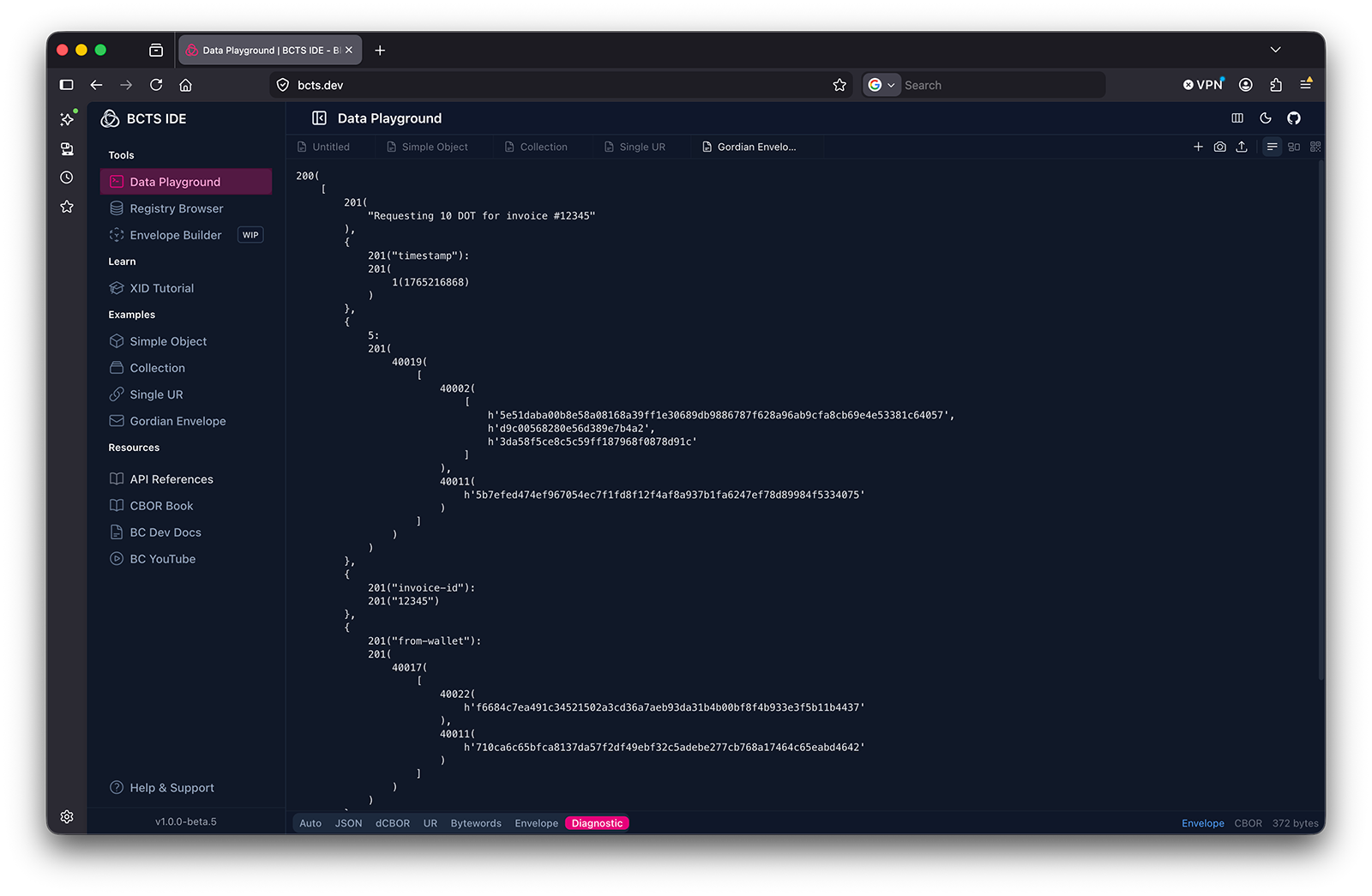
|
BC-UR Playground: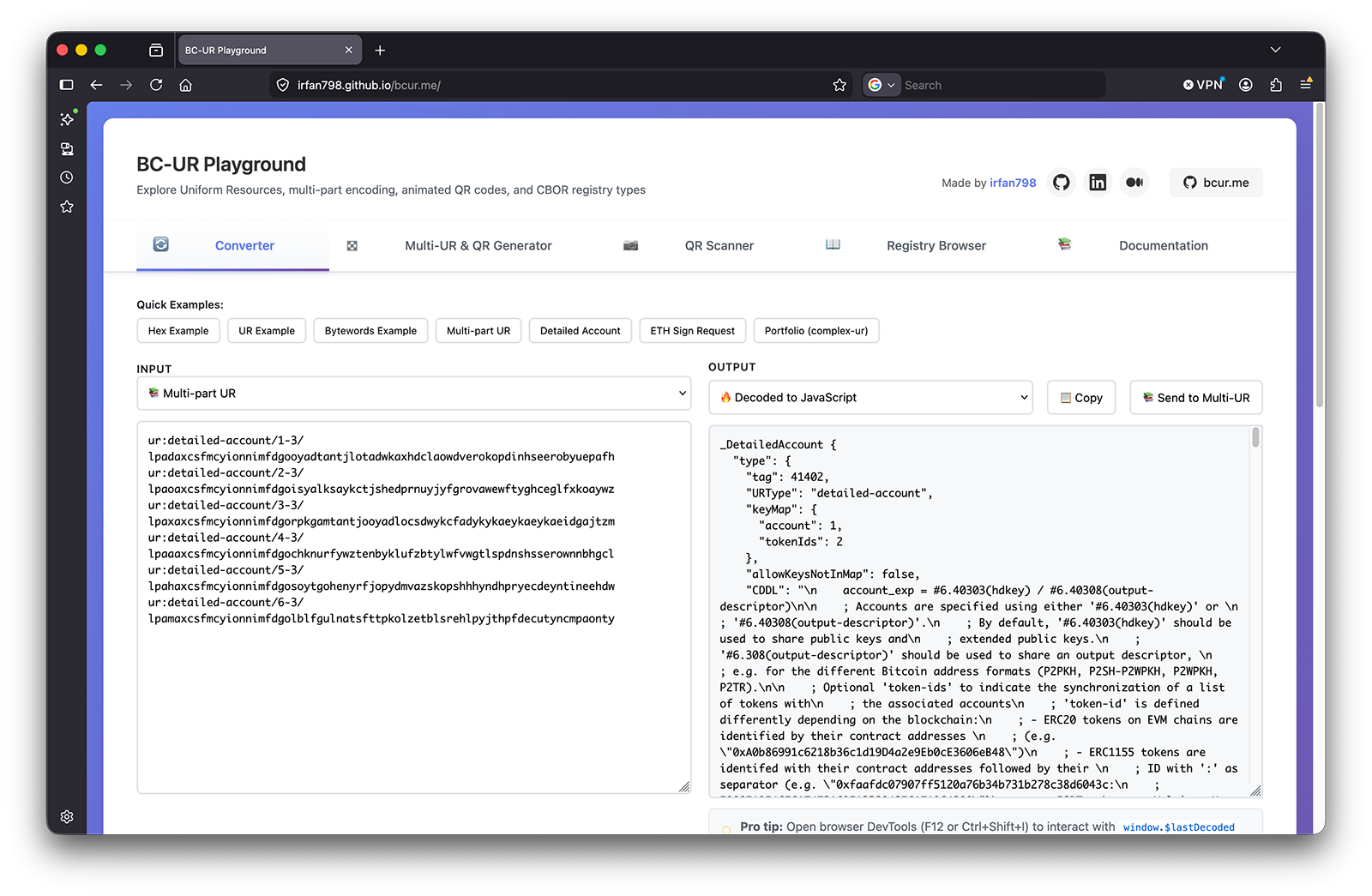
|
Seedtool.info: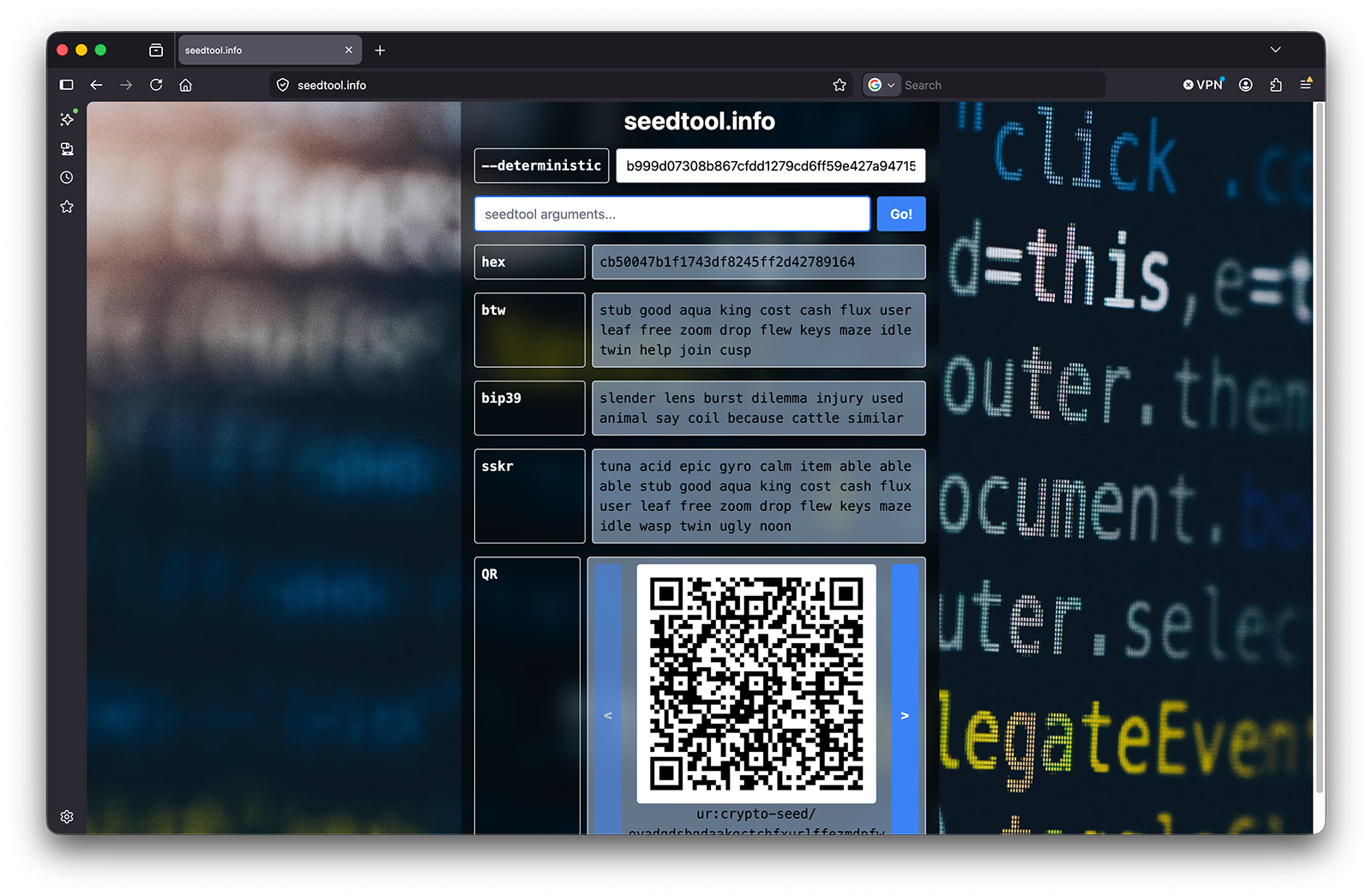
|
Lifehash.info: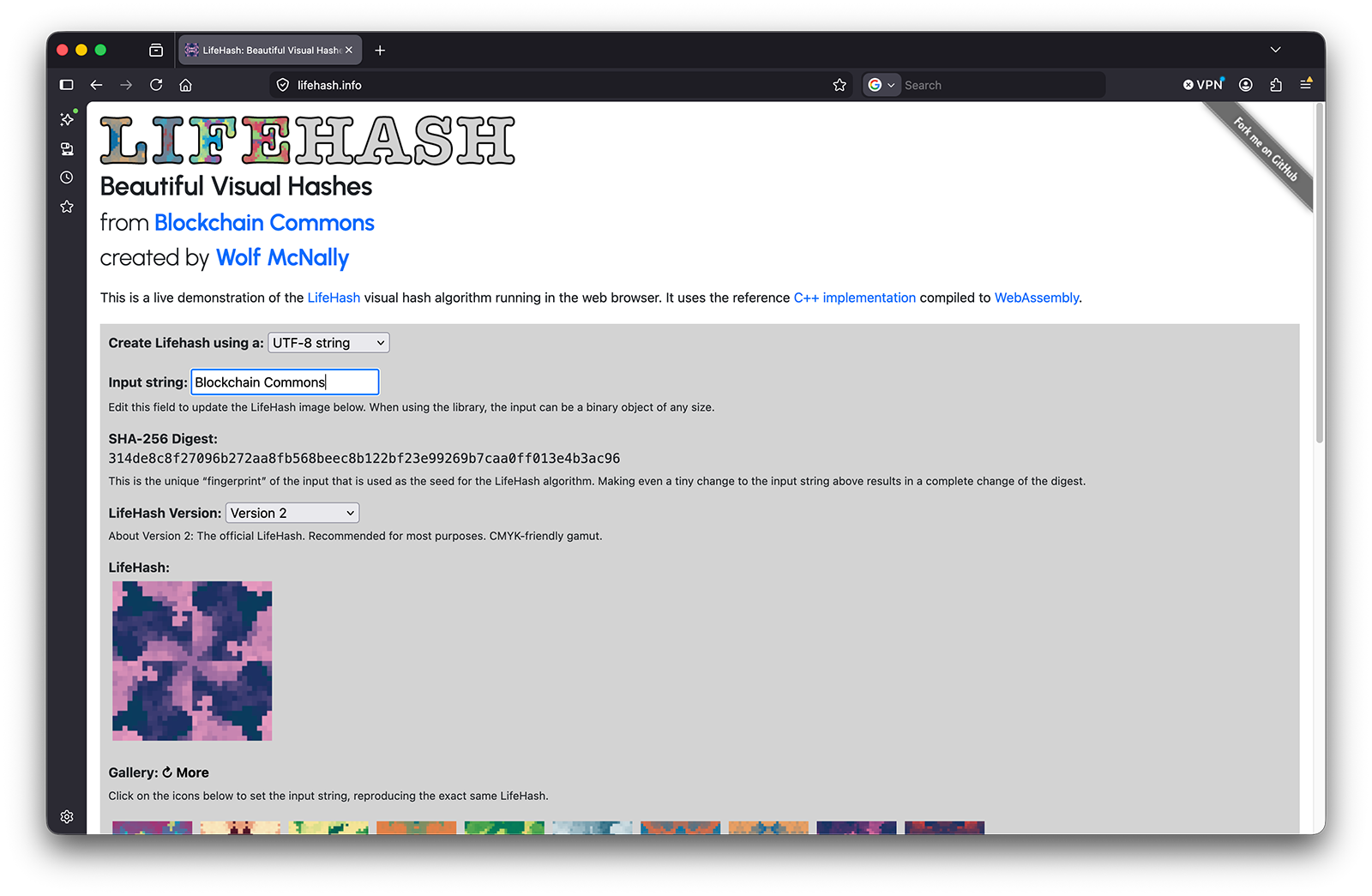
|
We still have one area in the developer pages to revamp: architecture. We intend to do that in Q3, when we’re going to better differentiate network architecture and architectural design and also create new pages for many of our architectural design patterns.
Learning XIDs
XIDs are of course our capstone to our self-sovereign identity work, pairing the revised principles of Revisiting SSI with an actual technological pilot.
Keys in XIDs. Our Learning XIDs course reveals how to use XIDs. In Q2, we expanded it with a new chapter 5, “Managing Keys”, which details how you can use heteregeneous keys to improve key (and identity) resilience and to recover from loss.
Amira Progress Report. The Amira use case that was developed at Rebooting the Web of Trust has long been our North Star for developing XIDs as a decentralized identifier that went beyond the compromises of DIDs. In Q2, we released a progress report on Amira that detailed the requirements embedded in the use case, how we expanded them, and how XIDs fulfill those needs.
Learning Bitcoin
The Human Rights Foundation opened the year with support for an update of our popular Learning Bitcoin project, with that work continuing into Q2 (and planned through the rest of the year).
New Course Pages. Our updated course is now available at learningbitcoin.blockchaincommons.com, which uses mkdocs to offer a more accessible version of the course. Though the update remains a work in progress, the first 15 chapters are all available here in close to final form.
Working with Secrets. Most of our work is revisionary, updating the course for changes in both the CLI commands and the underlying models for Bitcoin. But we’re also introducing new chapters as appropriate. Chapter 10: Working with Secrets is one of our biggest additions to date. It addresses the fact that bitcoin-cli keeps its secrets pretty close to the vest and shows how you can improve your resilience either by creating a seed elsewhere and importing keys or else exporting master private keys and storing them elsewhere, possibly with metadata (as supported by a Gordian Envelope).
Learning Bitcoin: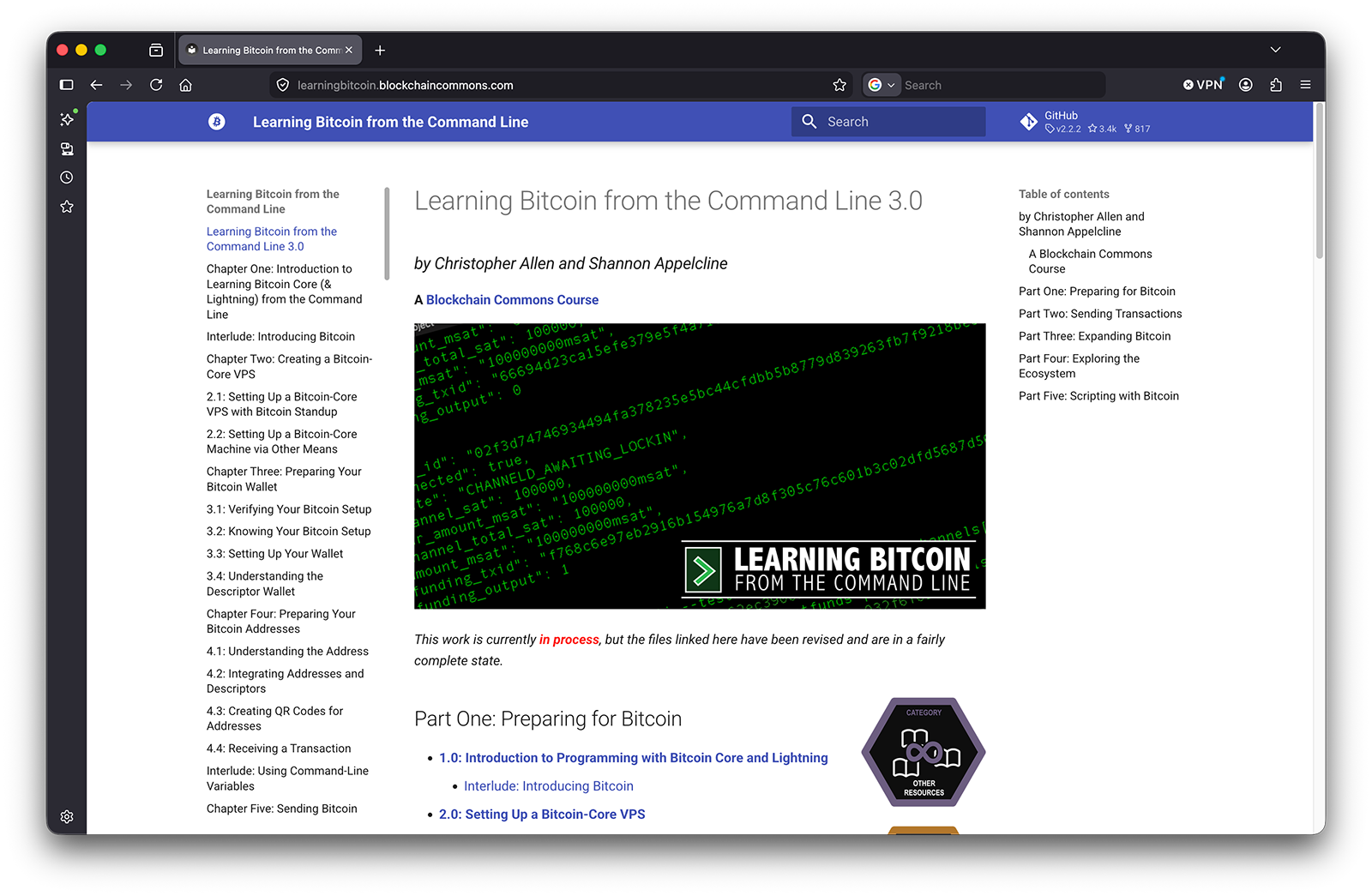
|
Learning XIDs:
|
Software Updates
When we capped the Blockchain Commons stack in Q1, we expected to dramatically slow down our technical development while we work on getting our current specifications deployed. Nonetheless, Q2 saw some minor upgrades.
Envelope CLI. We closed 20 Issues on bc-envelope-cli-rust, our main reference app for the Gordian Envelope specification. This resolved some interactions between XIDs and URs, answered some issues with XID output commands, allowed native importing of XIDs into envelopes, improved exporting options, and more. There were some bug fixes, but we also introduced new best practices for how we think Envelopes (and XIDs) should work in real usage. The newest envelope-cli is 0.35.0. Make sure you update (cargo install bc-envelope-cli --version 0.35.0) if you haven’t recently.
Stack Update. Some of the updates actually occurred in bc-xid-rust; there were also a few updates for dependency alignment in our stack.
The Trust Architect Speaks
We released a number of blog posts in Q2, many of them focused on Christopher Allen’s architectural thoughts.
“Agency in AI”. How can we solve authority and crediting problems with agentic systems? Plus, the advantages of self-sovereign agentic computing.
“Ten Years of SSI”. More on the 10-year revision of the SSI principles and why it was required.
“Sanctuary and Exodus”. Ethereum’s focus on “Sanctuary Technologies” and how that meshes with our own ideas of “Exodus Protocols.”
“On Being the Fifteenth Standard”. The advantages and challenges of Gordian Envelope: why it can be important to offer a new standard even when there are 14 more.
“When Intelligence Becomes a Permission”. AI has changed the question of who controls your identity to one of who controls your cognition. How the government censorship of frontier models has made that a dangerous proposition.
Grants
Finally, the funding landscape for our digital agency work has remained bleak, so we’ve been working on an increasing number of grant requests to try and support our work. Our most recent grant requests were to support our work with standards groups, to continue to expand our work on self-sovereign identity, and to revise the Smart Custody book.
We can use your support too. Talk with us about projects you’d like to partner on; support us on GitHub; and tell us about grants that you think might fit with our goals or our work to date. Thank you!